.svg)
.svg)


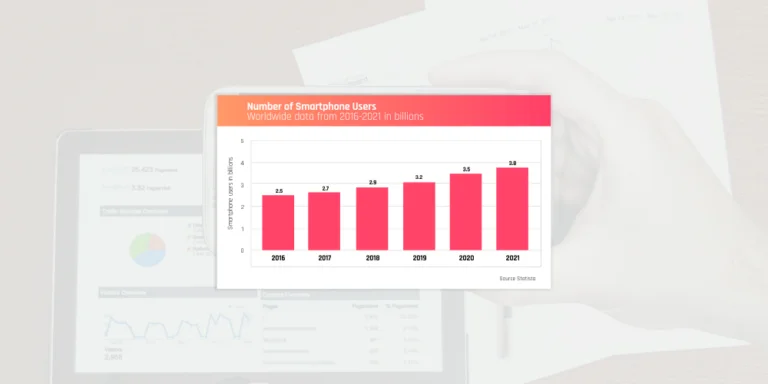
Mobile apps have become essential for nearly every modern business. According to the latest StatCounter data from late 2024, over 60% of global online access happens via mobile devices, and iOS accounts for roughly 30% of that traffic.
It’s clear that iOS development is a worthwhile investment. The mobile app market is booming, and by the end of 2025, global mobile app revenue is projected to surpass USD 935 billion, driven by in-app purchases, subscriptions, and mobile ads.
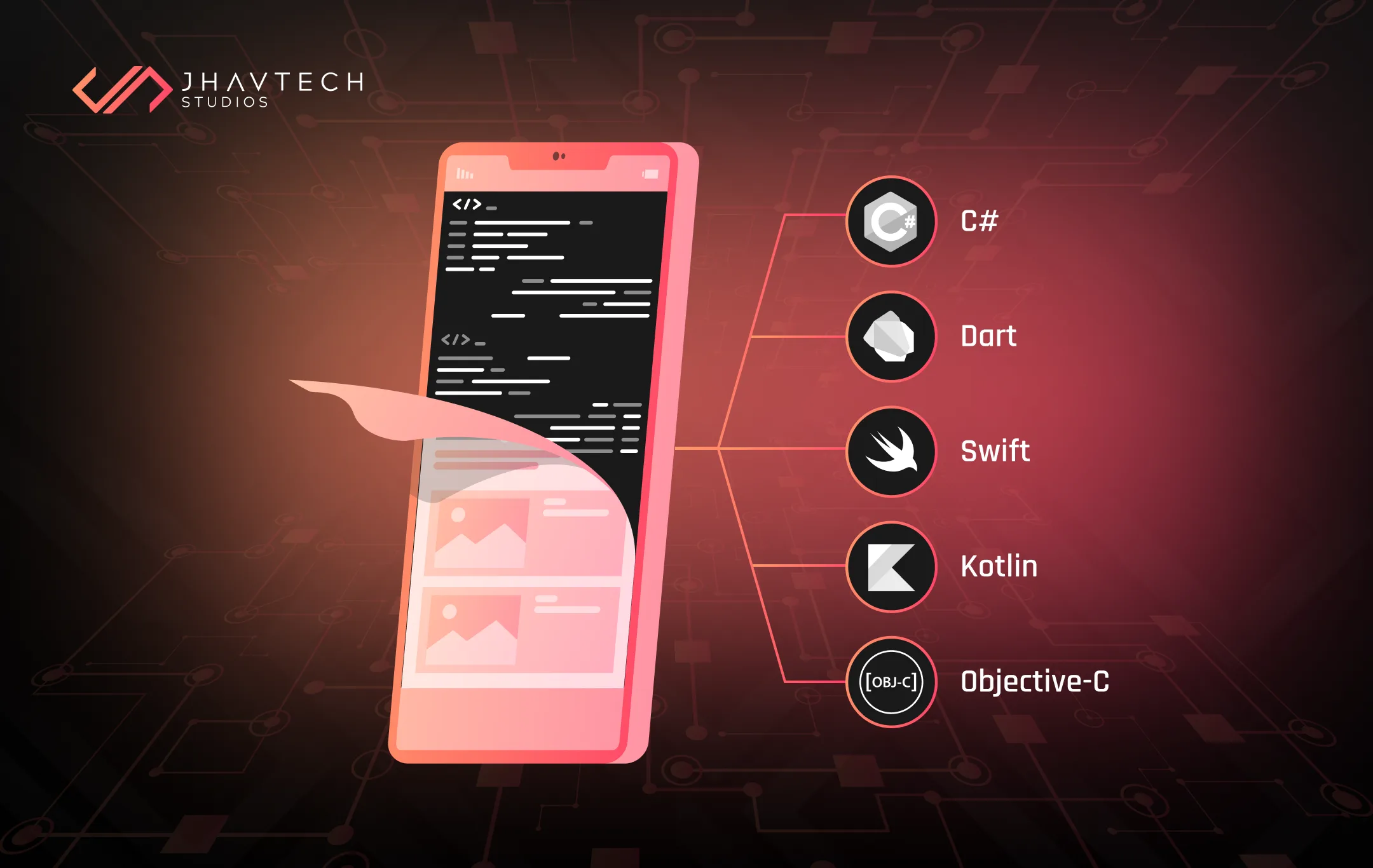
So, what’s the best programming language to build a high-performing iOS app in 2025? With so many choices, it’s easy to feel overwhelmed. That’s why we’ve put together a guide to the top 5 programming languages for iOS app development this year—backed by current trends, performance insights, and real-world use cases.
Swift: Apple’s Own Language for Modern iOS Development
Introduced by Apple in 2014, Swift remains the most recommended language for iOS app development in 2025. It was designed to be fast, safe, and expressive—combining the performance of compiled languages with modern syntax and features.
Swift is also tightly integrated with SwiftUI, Apple’s declarative UI framework that simplifies building cross-platform interfaces for iOS, iPadOS, macOS, watchOS, and tvOS.
Advantages
- Easy to learn and use with modern syntax
- Seamless integration with Xcode and SwiftUI
- Excellent performance and memory management
- Regular updates and strong support from Apple
- Growing community and package ecosystem
- AI-assisted coding features in Xcode improve developer productivity
Disadvantages
- Smaller talent pool compared to JavaScript or Python
- Limited third-party tools compared to older languages like Objective-C
Objective-C: The Classic Choice for Legacy iOS Applications
Once the primary language for Apple platforms, Objective C is now primarily used for maintaining older apps. It’s a superset of C with object-oriented features and strong integration with Apple’s Cocoa and Cocoa Touch frameworks.
Although less popular today, Objective-C is still valuable in projects that require compatibility with legacy codebases or older iOS SDKs.
Advantages
- Mature and time-tested language
- Excellent compatibility with older iOS versions
- Deep integration with Apple frameworks
Disadvantages
- Outdated syntax and development practices
- Steeper learning curve
- Declining community support and fewer updates
C#: Microsoft’s Powerful Language for Cross-Platform iOS Development
C# is an object-oriented programming language developed by Microsoft, primarily used with the .NET ecosystem. Thanks to .NET MAUI (Multi-platform App UI), developers can now create cross-platform apps—including iOS—with a single codebase.
For developers with prior experience in .NET or those building enterprise-grade apps, C# offers a robust and scalable solution.
Advantages
- Cross-platform development with .NET MAUI
- Large developer community and extensive documentation
- High scalability and ideal for enterprise applications
Disadvantages
- Not native to iOS; may require more setup]
- Steeper learning curve for non-.NET developers

Dart: Google’s Language for Fast and Flexible iOS App Development
Dart is the language behind Flutter, Google’s open-source UI toolkit. Flutter has become one of the most popular choices for building cross-platform apps, including iOS, with a single codebase.
In 2025, Dart remains strong thanks to the improvements in Flutter’s rendering engine, native integration, and tooling support.
Advantages
- Fast development with hot reload
- Cross-platform capabilities with a single codebase
- Strong documentation and Google-backed community
Disadvantages
- Limited native APIs; needs plugins for full iOS features
- Fewer job opportunities compared to Swift
Kotlin Multiplatform: The Emerging Language for Seamless iOS and Android Development
Kotlin Multiplatform allows developers to share business logic across iOS and Android apps while keeping native UI layers. This makes it ideal for teams looking to reduce duplicate code while maintaining native performance.
With tools like Kotlin Multiplatform Mobile (KMM), developers can write shared code and access platform-specific APIs when needed.
Advantages
- Code sharing between platforms while preserving native UIs
- Backed by JetBrains and supported by Google
- Flexible and ideal for modular app architecture
Disadvantages
- Still maturing with evolving tooling
- Smaller community and fewer learning resources
Final Thoughts…
Comparison Table: iOS Development Languages in 2025
| Language | Popularity | Learning Curve | Cross-Platform Support | Ideal Use Case |
| Swift | High | Easy | No | Native iOS development |
| Objective-C | Medium (Legacy) | Hard | No | Maintaining older apps |
| C# | High | Medium | Yes (.NET MAUI) | Enterprise-grade cross-platform apps |
| Dart | Medium-High | Easy | Yes (Flutter) | Startups and MVPs |
| Kotlin Multiplatform | Growing | Medium | Yes | Code sharing across platforms |
The best iOS development language in 2025 depends on your specific goals. Swift is ideal for native iOS development. C# and Dart are strong options for cross-platform apps. Objective-C is relevant for legacy projects, and Kotlin Multiplatform is emerging as a powerful tool for shared codebases.
Ultimately, your choice will depend on your team’s expertise, the app’s target platforms, scalability needs, and project timeline. And if you’re looking to build an iOS app in 2025, JhavTech Studios offers expert guidance and development services to help you succeed.